
The First Week Back
I restarted my daily Mandarin practice this past week with the best of intentions. The plan was to spend fifteen minutes going through flashcards during my lunch break using the Pleco app. I set up the flashcards feature to test me on HSK 1 and HSK 2 vocabulary. Rather than creating a separate alarm specifically for Mandarin, I tried habit stacking, attaching the practice to my existing lunch break routine. The logic was sound. Combine tasks to eliminate wasted time and reduce the mental load of remembering yet another obligation.
The first two days went smoothly. I dutifully reviewed my cards, testing myself on the vocabulary needed for those early exams. But the third day seemed to disappear into the void of a busy week. In other words, I forgot. The fourth day became a makeup day where I completed two sessions back-to-back to compensate for the lapse.
The Character Observation
I learned to read traditional Chinese characters while living in Taiwan. I didn’t want to lose my traditional literacy, especially since I find the characters beautiful, but I eventually started focusing more on learning simplified characters, figuring it would be useful for travel to mainland China.
This week, I couldn’t help but notice that when I find myself stuck on a word during flashcard reviews, I look at both the simplified and traditional versions displayed in Pleco. More often than not, when the two forms differ significantly, I remember the pronunciation faster when looking at the traditional form. It appears that, despite my past efforts to prioritize learning simplified characters (and it was for a decent chunk of time, might I add), the character system I learned first still sticks more in my brain.
The Post-Workout Boost
Later in the week, I experimented with reviewing flashcards immediately after exercising. The difference was palpable. I’m not sure if it was because of increased oxygen flow or simply elevated endorphins, but character recall felt sharper and more fluid. The satisfaction of physical exertion seemed to carry over into mental exertion, creating a compound effect of accomplishment.
The Consistency Challenge
I’ll be honest about this week’s metrics. Technically, I covered a week’s worth of characters (twenty per session), but I didn’t hit my daily target consistently. I skipped one day, made it up the next, then skipped the following day (tapping out in complete “weekend mode”), and tackled another double session to compensate.
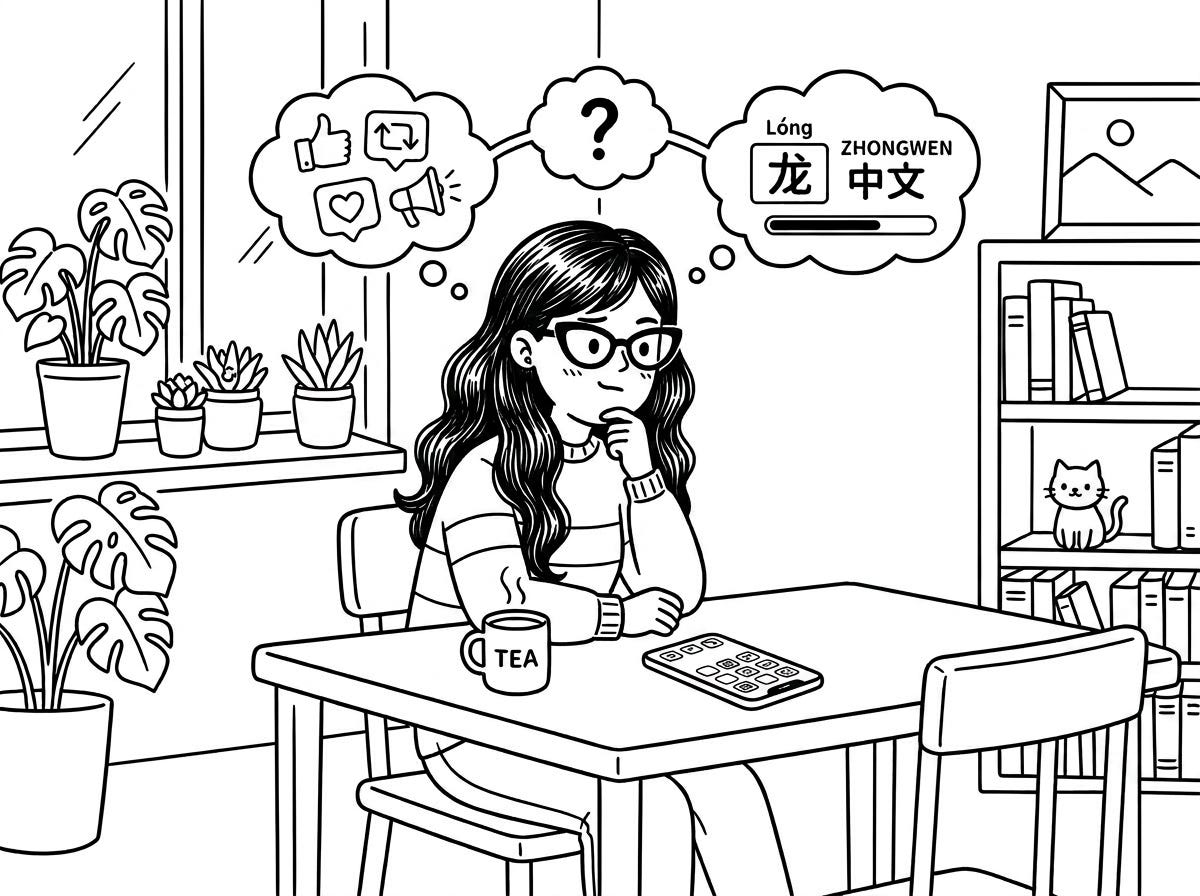
The friction of starting remains my biggest hurdle. My thumb has developed a muscle memory that leads it straight to Instagram or YouTube the moment I unlock my phone. It’s basically a reflex at this point. Choosing Pleco instead requires active resistance against the algorithm’s pull. But once I push through that initial resistance and find my flow, the satisfaction is genuine (especially when I correctly recall both the meaning and pronunciation of a character I was sure I’d forgotten).
Knowing Your Bandwidth
I haven’t started looking for a tutor yet. Part of me feels like I’m being too easy on myself, taking “baby steps” when I should be sprinting. But the reality is that my schedule is currently bursting with preparation for an upcoming event. Right now, maintaining this flashcard habit (imperfect as it is) represents my best effort.
This raises a larger question that I’m still sitting with: How do we balance the need for consistency in skill-building with life’s inevitable ebbs and flows? Some chapters offer more space for ambitious projects while others feel like barely keeping afloat. We know that consistency is the engine of progress, but life consistently refuses to cooperate with our ideal timelines. When do we push past our perceived limits, and when do we wisely deprioritize to preserve our sanity?
Maybe that’s a topic for another day. Until then, may your flashcards be memorable and your apps be opened intentionally.