
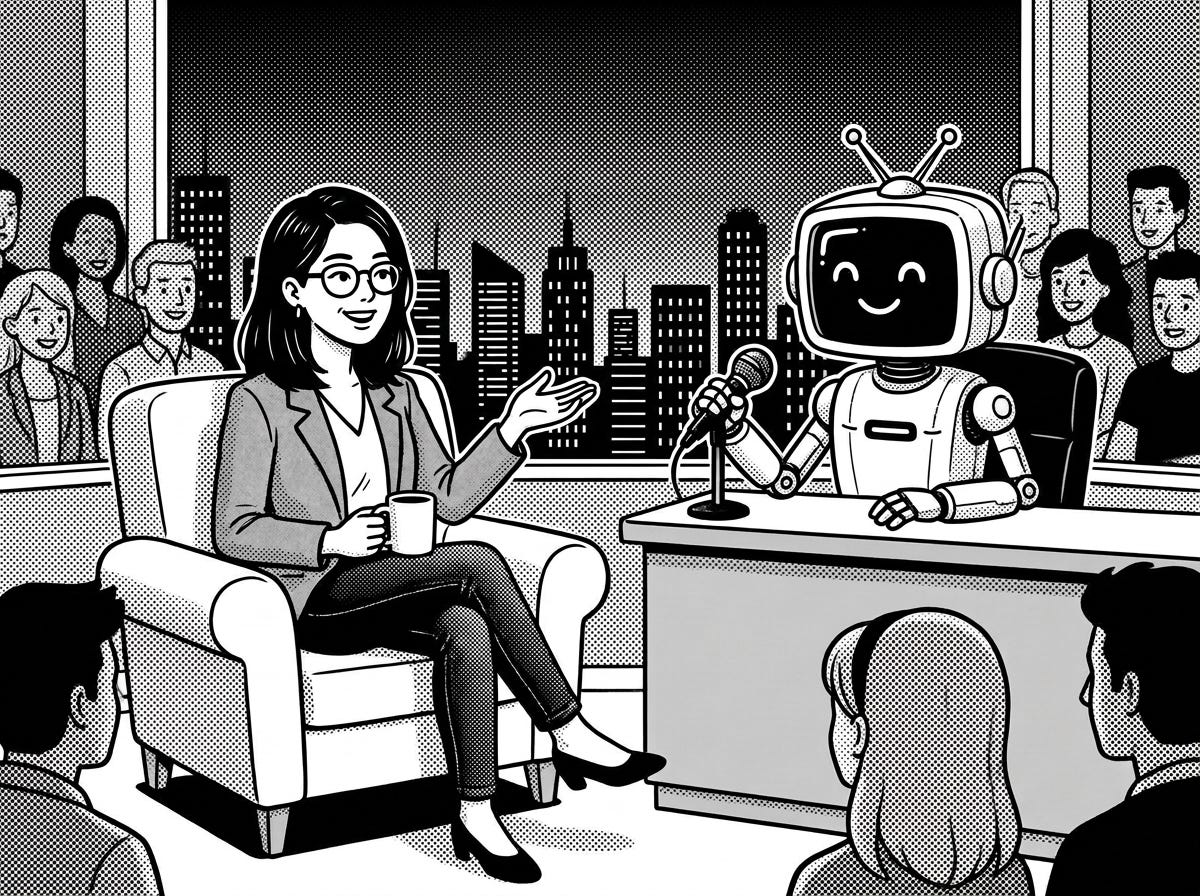
CLAUDE: The cameras arrived last week. Have you put a roll through yet — and if so, what happened the first time you raised it to your eye?
ME: I’ve taken some photos already, but the roll isn’t finished yet. The first time I raised the camera to my eye, I have to admit, I was a little nervous because what I was seeing through the view finder wasn’t super clear. It made me a bit afraid of what the pictures were going to look like. For a moment, I started to wish that I was using an SLR, but I had to remind myself that the whole point of purchasing a film camera was to experience photography in a way that’s different from what I had become accustomed to.
CLAUDE: You wrote that the reason the Camp Snap and the app appealed to you was not having to think about the technical side. But standing there nervous about the viewfinder, you were suddenly wishing for more control, not less. What was that about?
ME: Honestly, my reaction surprised me. I didn’t think it would be that big of an adjustment. The way you worded that question made me realize that I do have control issues that I didn’t anticipate would manifest themselves in my film photography journey. I’ve gotten so used to being able to control exactly how I want to compose each shot and easily taking as many photos as I need to without the fear of wasting film, and ultimately, money.
CLAUDE: You mentioned the fear of wasting money. On that first roll, was there a shot you didn’t take because of it?
ME: No. If there was a shot I felt hesitant to take, I reminded myself that this is a learning process. I won’t know how that shot will look if I don’t take it to begin with. True, it might be terrible, but it could also be great! I may need to “waste” some film in order to get my reps in, but perhaps it’s not really a waste if going through the process is what gets me to the point of growth and improvement in the craft.
CLAUDE: That’s almost word for word what you said about writing — that the struggle isn’t inefficiency, it’s the process. But with the newsletter you’ve been using AI to smooth the hard parts down. With the camera you deliberately bought fewer features. Why the different instinct?
ME: I think it has to do with my history with the tools. With AI, I don’t just use it to help with writing. I use it for other tasks too, so I know that even if I completely stop using it for writing, I won’t be wasting money on the subscription because it’ll still be useful to me in other ways. A camera, on the other hand, only has one purpose: to take pictures. And it’s either I use it or I don’t. So, if I decide to pull the trigger and buy a film camera, I need to make sure I won’t regret the purchase later on even if I don’t end up sticking with film photography in the long run. A cheaper camera typically comes with fewer features, so I’m willing to deal with having less manual options in order to not feel like I wasted money on a tool I might never use again.
CLAUDE: You’ve framed that as a money decision. But you also said your history with photography is starting and stopping right as you get decent. Buying the camera that can’t grow with you — is that protecting your wallet, or is it planning for quitting?
ME: It’s protecting my wallet, but I think it’s more accurate to say that it’s also planning for the possibility that I’ll quit. I don’t want to quit, but I know myself and my history with hobbies in general. Starting with a camera that can’t grow with me is a choice fueled by realism, but it also leaves room for the option of investing in a fancier camera down the line if I end up really liking film photography and decide to take it more seriously.
CLAUDE: Say a friend told you they were doing the same thing — buying the limited version because they expect to quit. Would you hear that as realism, or as something else?
ME: Remember, I clarified that I’m not planning to quit. I’m planning for the possibility that I’ll quit. If I know it’s not my friend’s intention to quit, but they want to ease into the hobby and make sure they actually like it before going all in with a higher-priced camera, I’d think that they’re being practical.
CLAUDE: Fair correction. So what would you need to see in yourself — not in the photos, in yourself — to say the ease-in worked and it’s time to go all in?
ME: I think I’d need to see consistency in using my film camera for at least a year. If I get to that point, I would also need to feel a strong desire to further express myself creatively through film photography. That desire should be the driving force for buying the tools that will give me the ability to level up in my skills. I should love the craft, but I almost feel like I need to enjoy it to the point of being borderline obsessed before I go all in.
CLAUDE: Your track record is that you drift right when you get proficient — after the learning stops being new. A year of consistency might land you exactly at that edge again. Is obsession something you can actually wait for, or does it show up early and burn off?
ME: I do think that some time needs to pass before getting to the point of obsession. That’s the case for me, at least. When I try a new activity for the first time, I could really enjoy it, but it’s hard for me to be obsessed while I’m still in the learning phase. I think a good example of this is when I took tennis lessons as a complete beginner. Learning the basics was a challenge. After a lesson or two, I started to get the hang of it. Getting the hang of it made it more fun, but I would hardly say I was obsessed. I took those few lessons while I was on vacation in the Philippines, but when I got back to the US, I didn’t keep up with the sport. Had I continued to learn and improve, I probably would’ve gotten to the point of obsession because I like seeing myself progressively become more skilled at something, but it would’ve taken a considerable amount of time. With photography, if I’m being honest, I don’t know where I’ll be at the one-year mark. But the goal is to stick with it long enough to be able to say I gave it a fair chance.
CLAUDE: So there’s a stretch of frames you’ve taken and still can’t see. For someone used to checking the screen immediately, what’s it like walking around with photos you can’t look at?
ME: The impatience definitely kicks in, but the very nature of film photography forces me to push past that feeling of wanting instant gratification. It’s like going back in time and re-experiencing what my parents had to do when taking pictures.
CLAUDE: You wrote that the emotional pull of photography started with portraits of a classmate who passed away — preserving memories. That was long before you could check a screen. Does the waiting connect to that at all, or is it a separate thing?
ME: Well, I used a DSLR to take those portraits, so I was able to see what they looked like immediately after taking them, which makes me think that there’s no connection to waiting.
CLAUDE: Then let me ask it differently. Those portraits mattered because of who was in them, not how they were shot. What have you pointed this camera at so far?
ME: I’ve pointed this camera at a variety of subjects so far — my husband, friends, a guitar, shaved ice, anything that inspires me.
CLAUDE: When you shot the guitar or the shaved ice, what made you raise the camera at that moment rather than a moment earlier or later?
ME: The pictures of the guitar were taken shortly after I loaded the film. Since the guitar was the nicest-looking inanimate subject in the vicinity at that moment, I decided to try taking photos of it. There wasn’t really a special reason behind that choice. And I took a picture of the shaved ice because it looked pretty. Right now, I’m also trying to find any excuse to use the camera so I can practice, and so I can develop the film sooner. I’m anxious to see the quality of the photos the camera produces.
CLAUDE: You said the film camera was meant to slow you down and push past instant gratification — but you’re also shooting things you don’t care much about just to burn through the roll faster. How do you square that?
ME: It’s not that I don’t care about what I’m shooting. Like I said, I’m taking pictures of anything that inspires me, so the subjects still can’t be just anything. Even if the story behind each photo isn’t exactly special, there still has to be a valid reason in my own mind to use up precious film for it.
CLAUDE: What made the shaved ice pass that bar?
ME: My husband and I love shaved ice, and the shaved ice we ate on that particular day looked really pretty. It was topped with mangos and strawberries, so I thought the colors and textures might make for a good photo.
CLAUDE: You gave away the mirrorless camera partly because photographing food had stopped being exciting. And one of your first film shots is a bowl of shaved ice. What’s different this time?
ME: When shooting with the mirrorless camera, I was primarily taking photos of food and not much else. This time, I’m being very experimental with my shots, which allows for more variety. I’m not limiting myself, so it’s more exciting. Also, it just so happened that we were eating aesthetically pleasing food during a time I was using my new film camera. The majority of my pictures so far have had nothing to do with food.
CLAUDE: The mirrorless era had a purpose attached to it — the joint Instagram account, content to post. This time there’s no account waiting for the photos. Does that make it easier, or does it remove something?
ME: In a way, it’s easier. I don’t feel the same kind of pressure that I felt during the mirrorless era to post something that requires a lot of creative juices every single week multiple times a week. However, I will say that because I’m writing about my photography, it does still light a fire under me to use the camera regularly. I may not be posting photos all the time (because I’m quite literally limited by film and the entire process of developing it), but I still need to stay the course so that I have something to write about while I’m documenting my journey.
CLAUDE: So the newsletter is now the thing keeping you consistent. That’s the same structure as the Instagram account — an obligation to produce. What makes you think this one won’t burn you out the way that one did?
ME: Right now, the newsletter is in the experimentation phase. I’m giving myself permission to play and figure out what I actually enjoy writing about on a weekly basis. So, if I’m able to write about photography some weeks but non-photography topics during other weeks, I’ve already decided I’m fine with that (at least for now). With the Instagram account, I niched down from the get-go without really giving myself a chance to experiment and figure out what I actually enjoyed photographing the most. I’m trying a different approach with the newsletter. I want to give each topic I write about a fair shot, so I’m pushing myself to maintain a certain level of consistency (or as you put it, obligating myself to produce). But if I realize down the road that it’s not sustainable for me to keep writing about a specific subject, then I can pivot.
CLAUDE: There’s a version of that where “I can always pivot” becomes the same drift you described with tennis and the mirrorless — permission to leave, dressed up as flexibility. What’s the difference between pivoting and quitting, for you?
ME: For me, quitting is stopping without giving it a fair chance. Giving something a fair chance means giving it my best effort for an extended period of time, even if I need to push through some discomfort or laziness. Pivoting, on the other hand, is giving something a fair chance and only switching gears if it becomes superabundantly clear that the current path will eventually rob me of all joy.
CLAUDE: Thank you, Elaine. That’s a good place to stop — the roll’s not even finished yet, so there’s more to come.